This will give you a brief overview of your RV Electrical system. I’m not discussing generators or solar right now because this overview focuses on what most RVers use in their trailers. As always, use extreme caution when troubleshooting the electrical system. Better yet, leave it to the professionals.
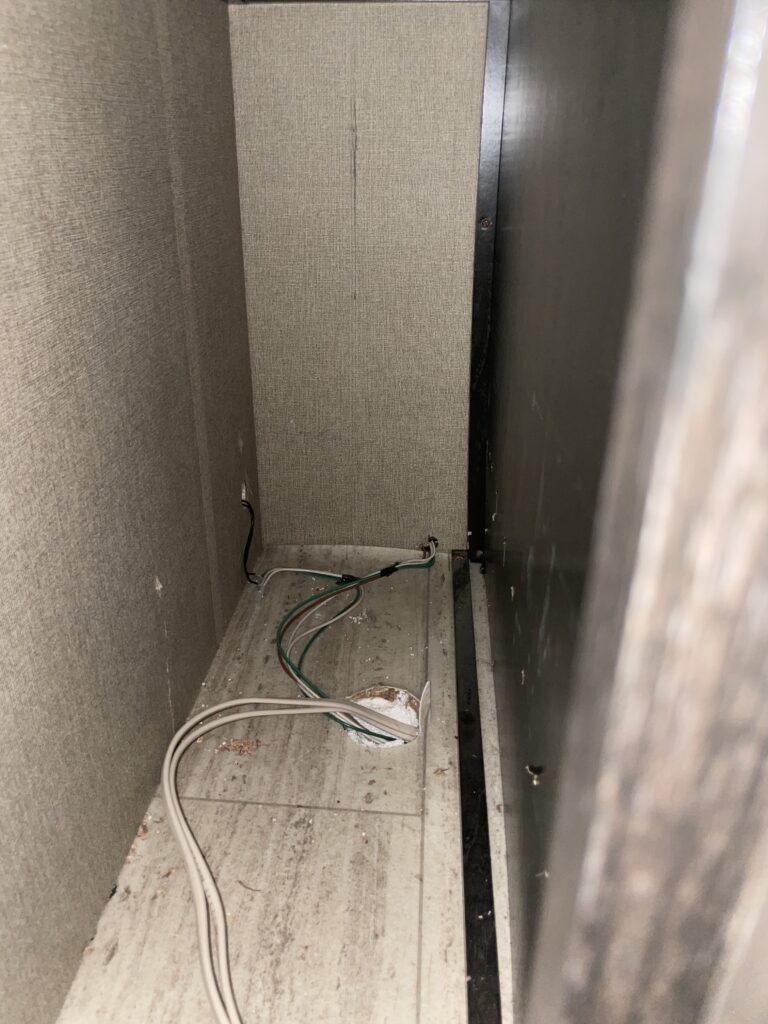
You actually have 2 electrical systems, a 12-volt Direct Current (DC) system (just like your car) and a 120-volt Alternating Current (AC) system (Like your house). However, sometimes one accessory requires both electrical systems to run.
What actually runs on 12 volts?
RV Lighting inside and outside.
The thermostat for the AC and furnace
The Furnace
Monitor panel
Ceiling fans
USB outlets
Awnings and awning lights
Slide rooms
Water Pump
Water Heater (can run on both AC or 12 volt)
Refrigerator (can run on both AC or 12 volt)
Your 12-volt system runs on your battery. The power converter charges the battery using AC current from the campground pedestal (Shore Power). The battery also charges through your trailer connection while you’re towing on the road. When plugged in at the campground the Converter takes that AC and “Converts” it into 12 volts and sends that to the RV battery.
With a fully charged battery your 12-volt systems will be operational. Without a charged battery, your 12-volt systems will not work. Think of the converter as just a big battery charger. This is why when people have a converter fail, they might attach an external battery charger to get them through their camping trip. Keep in mind – not having 12-volt power doesn’t necessarily mean that the converter is bad. A 12-volt cut-off switch may have been engaged, battery cable may be off, the battery may be bad, or a fuse may have blown. So don’t jump to the conclusion that you have a converter issue.
Many times you will hear folks mistakenly refer to their “Converter” as an “Inverter”. An inverter uses 12-volt DC power from your RV batteries and produces 120-volt Alternating Current. This is useful if you are not hooked up to shore power but would like to run a 120 volt appliance such as your TV, microwave, coffee pot, etc. Keep in mind it drains the batteries quickly in these cases. Folks that like to boon-dock find inverters a great benefit, but probably also have solar panels installed to help with the battery drain.
What runs on your 120-volt AC ?
Air conditioner
Television and DVD Player
Refrigerator (can run on both AC or 12 volt)
Regular Outlets
Water Heater (can run on both AC or 12 volt)
Microwave
Typically, you don’t hear about many folks having issues with the AC power in their trailer. However, the same sort of problems that you might have in your house can happen in a Travel trailer. A lack of power could indicate a short in the wiring, a blown fuse, or a GFCI outlet that has tripped. As a result, you will need to investigate the source of the problem.
In 2017 Tammy and I had a bathroom GFCI outlet that tripped and could not be re-set. The cause was an outlet behind the recliner that had too long of a ground and was shorting out. So, this was one of those times I was not impressed with the factory wiring.
To make things a little more complicated you also need to keep in mind that there are some items that use both 12 volt and 120 at the same time. The Air Conditioning is one example of this. The compressor runs on 120 while the fan and controls run on 12 volt. So in these cases, determining an electrical issue may be more complicated.
Hopefully this served to give you an over view of the systems to remove a little of the confusion when things go wrong.
Share this post:





Leave a Reply