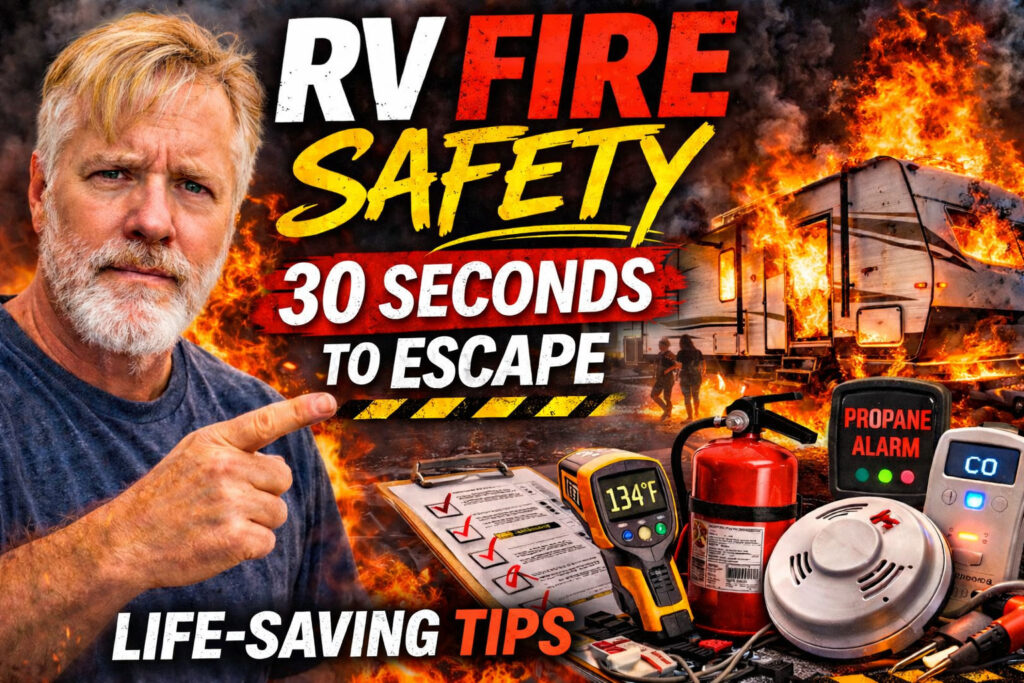
This is the topic no one wants to think about, but we need to talk about it! A fire can start anytime in an RV – while it’s on the road or just sitting in a campground.
National Fire Protection Agency (NFPA) reports that approximately 2,000 RV fires occur each year. They also stated that it takes 30 seconds for the fire to burn out of control. That’s hardly enough time for me to throw tammy through the window and grab Eva.
From 2018 to 2020, these fires resulted in an estimated 15 deaths, and 125 injuries.
It’s interesting to note that some insurance companies put the number of RV fires at 4,000 fires each year.
Here’s just a few recent examples:
April 2025 Shades of Sherwood Campground in Minneola Township, in MN. A cigarette discarded in a campground caused several travel trailers to start on fire and burn to the ground.

Sept 2025 (SC): Acapulco Campground on Lake Murray in Lexington County, SC. Fire destroyed six travel trailers, a vehicle, and a shed. One person was airlifted to the Augusta Burn Center.
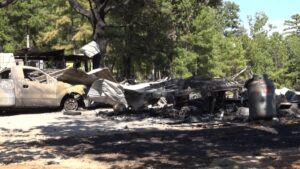
Nov 2025 (Kansas City, KS): 11 campers destroyed at a Camping World lot. (there was another camping world a year earlier that also had several campers burn to the ground).

Dec 2025 (TN): Fire destroyed at least two, and damaged up to four more RVs, displacing several residents just before Christmas. The blaze likely started from an electrical malfunction in one camper, spreading rapidly due to close proximity. No injuries were reported.
December 2025 Chico California – 2 rvs destroyed at a campground.
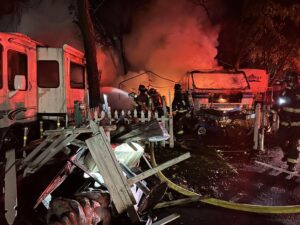
Jan 2026 (MO): Tall Pines campground saw a camper fully involved in fire. No one was at the camper at the time.
Let’s talk about how fires can take place:
In route fires:
Mechanical or electrical failures cause roughly 75% of the highway vehicle fires. This is why I have said multiple times to check your wiring under the trailer, and resolve any internal electrical issues immediately.
Many of these fires while in route were due to poorly adjusted brakes or overheated bearings or electric wiring shorting out. So, at rest stops get out and check your wheels, I use an infrared heat gun. My TPMS will also alert me of a temperature rise.
Propane fires can also happen during travel, which is why some states have laws regulation the use of propane while towing your trailer. We won’t get into if you should or should not travel with your propane fridge running.
I now have a 12-volt fridge so I am a little insulated from the discussion but I always felt uncomfortable with the propane fridge even at the campgrounds, because we do leave Eva in the Travel trailer on occasion. That being said the propane fridge has a much better track record than the 12 volt at this point, from a mechanical standpoint, not fire standpoint.
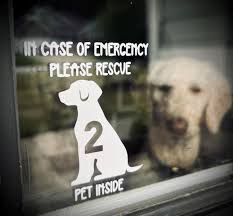
Speaking of floor children, it you have pets consider placing a pet sticker on your door or window. Someone may break into your trailer and save your pet in an emergency.
Regularly check your Propane fittings, hoses, and detectors.
Fires while camping:
Never leave appliances or fireplaces/space heaters, or fans running when unattended.
Do not overload any circuit by using power strips or extension cords. Many people plug portable heaters into power-strips that are not rated for that type of current draw, causing the wires to melt. Always plug directly into an outlet and remember not to overload the capacity because more than likely, there are other items running on that same circuit.
On my Imagine, one of the first tec’s said to me that he was surprised how many of the outlets were on one circuit.
Don’t store anything flammable near your cooking surfaces. Paper towels, napkins, cooking oils, towels, are just an accident waiting to happen.
Keep your outdoor appliances, grills, griddles, torches, lanterns etc. at a safe distance from your RV. You would be surprised at how many fires have started that way.
Precautions
Make sure your shore power cord is in good condition.
Invest in an EMS system, like progressive industries PT50X or PT30X – it will protect your trailer from power surges and it will provide over/under voltage, open grounds, open neutral and reverse polarity protection.
Make sure your CO2 detector, propane leak alarm, and all smoke detectors work. These will save your life.
Buy at least one extra fire extinguisher. The small ones that come with your travel trailer are probably woefully undersized. Having one in each room is a better, safer practice. Check them regularly to keep them fully charged and within their expiration date.
Understand how your emergency exit windows operate and how to get out in a hurry. It is probably a good idea to conduct a fire drill.
Have an exit plan for each area of the Travel Trailer. These fires spread quickly, there is no time to come up with a plan once the fire starts.
Know your exact location when you camp, so you can give this info to the emergency dispatcher in the event of a fire.
During the year:
Stay up to date on any recalls. For example, in the last few years there have been recalls on Propane Regulators, Wiring, Refrigerator wire shorts, and fires behind Convection Microwaves. These are not recalls to ignore.
Maintain your mechanical items like brakes and wheel bearings.
Also do the preventative maintenance on your AC Units, Furnace, Water Heater, and Refrigerator. If something doesn’t seem like it is running correctly get it checked out and repaired.
In the event of a fire:
If it is a small fire that you can easily extinguish without placing yourself in danger, then use your fire extinguisher. For any other situation, immediately leave the RV. Once you have exited, do not re-enter.
Call 911 and give them your exact location. If other RVs are close to you alert them so they can evacuate as well.
In conclusion: This isn’t a pleasant topic and not one I write to instill any fear, just precaution. Your odds of a fire are might be small, and even smaller yet if you keep the above in mind.





Leave a Reply